October 23, 2026
Gaining Ground, by Joan Barfoot
We’ll never know if I would have appreciated Joan Barfoot’s Gaining Ground quite as much had I picked it up in its original edition, a 1978 hardback, called Abra, published in Canada by McGraw-Hill-Ryerson Press. The novel won the Books in Canada First Novel Award, but it’s what happened to it decades later that has brought it onto my radar today, because sometimes the long afterlife of a book can bring surprises. For Barfoot—who went on to publish ten other books, was longlisted for the Man Booker Prize in 2002, shortlisted for the 2005 Scotiabank Giller Prize, and won the Marian Engel Award—that surprise was a message from an editor at Faber & Faber in the UK not so long ago that led to the book being reissued earlier this year with its UK title, garnering all kinds of rave reviews, and translation rights sold in 13 territories.
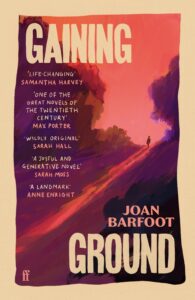
So that was that story that initially sold me on this novel, one that’s older than I am, now resurrected, but the new edition itself—with such an eerily gorgeous cover and painted illustrations of onions, radishes, eggplants, and other vegetables on the cover’s insides—was what clinched the appeal. Which was important, because I still wasn’t sure this wasn’t a novel I hadn’t already encountered in CanLit, along the lines of Surfacing, The Diviners, The Book of Eve, very much of its time. But with its fresh face, I was willing to give Gaining Ground a chance in its own right (definitely swayed by blurbs from Sarahs Moss and Hall, Margaret Drabble, Katherine May, and others).
And I’m so glad I did, because I found it enthralling, even though stories about people running away to the wilderness are never my favourite—social connection, for me, tends to be where story lives. But Abra’s voice in Gaining Ground is so rich and embodied in Barfoot’s first person narration that I never wished for her to have anybody to talk to (and even when she does, she is taciturn).
The story begins in the present, Abra disconnected from the world—from clocks and mirrors, and everything except the seasons and growing the food that sustains her in her rural cabin—when the world rolls up her driveway in the form of her 18 year old daughter Kate, last seen nine years before when Abra fled her tidy life in the city, leaving behind her husband and two children. At first, Abra doesn’t recognize the girl; Abra literally can’t even remember her own name after so many seasons of solitude. She is gruff, and antisocial, but vaguely aware that her daughter wants something from her that she’s not prepared to give.
What kind of woman abandons her family without a second thought? Barfoot’s novel is the answer to that, taking her reader back into the story of her former life, not even entertaining a justification of her actions, because Abra knows, like a kind of spell to which her curious name is the beginning. Whereas everything else about her except her name was always unremarkable before, especially the way she sleepwalks young into marriage, and a life of domestic convention. Eventually, she and her husband are well off. The husband is kind. Which means it’s impossible to explain how the key to her dissatisfaction is absolutely everything, and Abra doesn’t view her drastic escape plan as a kind of breakdown, even, regarding what happens to her instead as a story of finally becoming, of assembling a self and a life.
There is nothing romantic about Abra’s journey back to the land, nothing of Morag Gunn’s idyll by the river. Instead, her life is basic, rugged, and hard. Ever spring, she’s stricken with a fever. She lives on stored blanched vegetables from her freezer. Her work in the garden is backbreaking, and her body becomes hard and strong, and everything she does is imbued with a kind of essential purpose. None of it makes sense from the outside, she knows that others find her appearance disturbing, but the perceptions of others don’t concern her anymore, not in the slightest.
There is indeed something bewitching about Abra’s stream of consciousness, about the plainness of her telling, and what’s most interesting is its outright refusal of questions of right or wrong, what is natural and what is deviant, about good mothers or bad ones. This is a story that rises above such considerations and which, like its protagonist, is so solidly, marvellously, about itself.
October 19, 2026
Who By His Own Hand, by Greg Rhyno
I actually read an advanced copy of this novel this spring for a blurb (“I love everything about the Dame Polara series—the heart, the humour, the vivid and sometimes gritty Toronto setting. But most of all, I love Dame, lockpicker extraordinaire, and in Who By His Own Hand, she’s as forthright, messy and indomitable as ever. Greg Rhyno has penned another winner.”) and read it again last week in anticipation of interviewing Greg at his Toronto book event tomorrow night, Tuesday October 20, at Ben McNally Books from 5-7pm. If you haven’t yet discovered Dame Polara, I’d recommend starting with the first book in the trilogy, Who by Fire, and getting brought up to speed. Witty, clever, and compellingly Toronto-set, these stories of a reluctant sleuth—the daughter of a famed PI who learned the tricks of the trade early (along with an affinity for strong coffee)—whose personal life keeps dragging her back to detection never miss a beat. In this third instalment, the stakes have never been higher as Dame’s young daughter is missing after a kidnapping by an unhinged municipal bureaucrat holding a murderous decades-long grudge.
Oh so funny (the bumbling detectives on the case are called Hall and Oates), but also incredibly moving (“Parenthood, Dame had learned, was an unrelenting series of terrors. No one could truly defend their child against the cold chaos of an indifferent universe. Instead, she used those three little words that were every mother’s poor substitute for control: ‘You be careful.'”), in addition to the facts of the case and the journey to cracking it (never actually my primary concern when it comes to detective fiction to be honest), this novel—like the two that preceded it—is such feast of rich delights.
October 15, 2026
Anxious and Hairy, by Judy Wearing
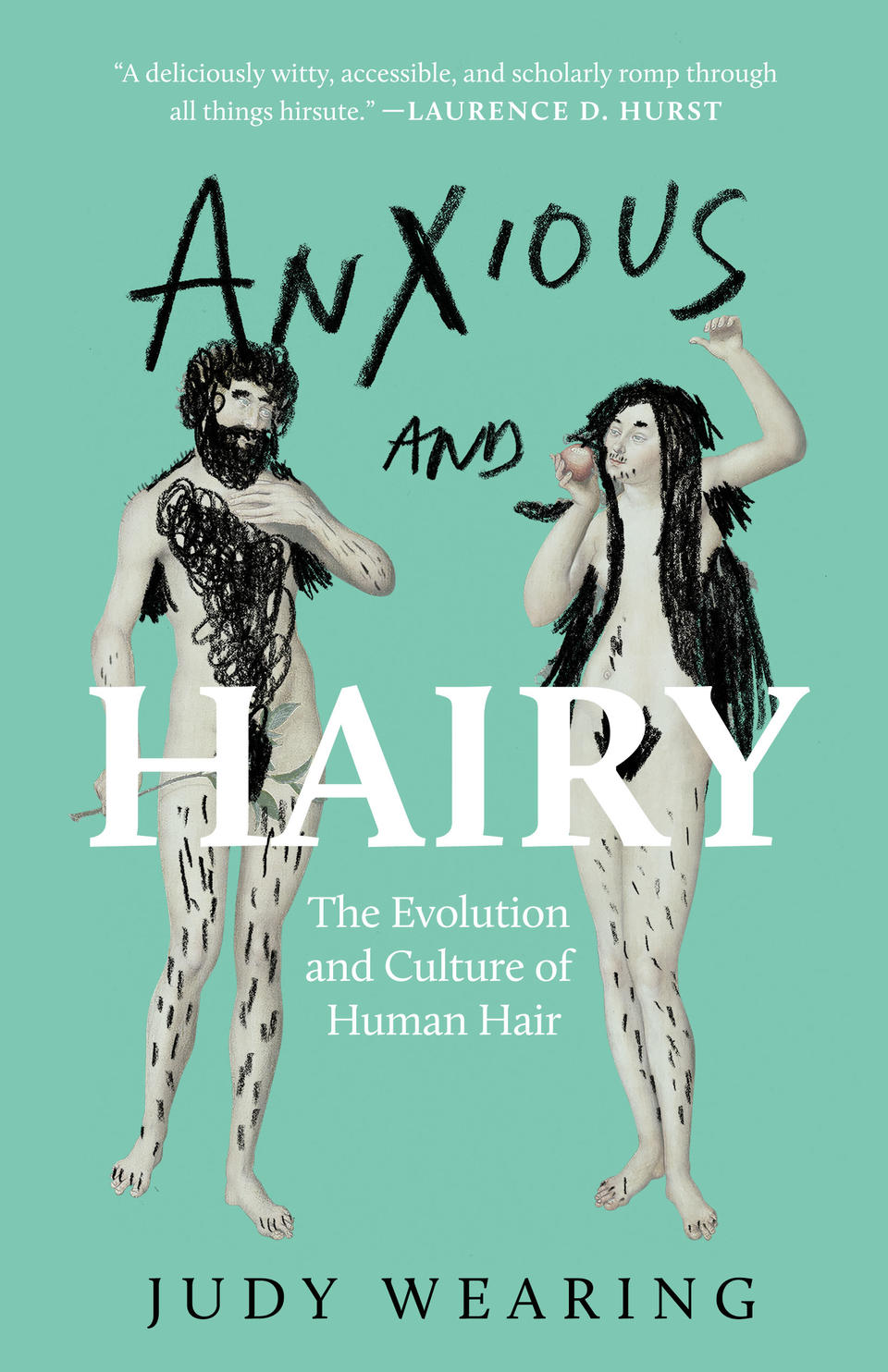
What a wild ride is Judy Wearing’s new book, Anxious and Hairy, a study through evolution and culture of human hair and the reasons why it makes us so anxious when it grows where it shouldn’t or doesn’t where it should. The scope here is huge, the approach so comprehensive (80 pages of notes and references!), and Wearing compellingly combines her own research with reporting from the front lines, ie accounts of her stylish Parisian hair cutting session, her experience attending a beard convention, or the time she submitted to a Brazilian wax.
If you’ve ever wondered why we have eyebrows—or what pubic hair is for, why we evolved to be (mostly) hairless apes, what evolutionary benefits are provided by Black hair, why beards might be useful to have in a bar fight, what alopecia has to do with foxes, what your hair and your nipples have in common, and why my eyebrows never grew back after they were sacrificed to the early ’00s style gods—this book will prove an absolute delight.
Wearing posits that hair makes us so, well, hairy, because our hair brings the reality of our animal selves to the surface. But our animal selves are also, she reminds us, what makes us human and—in our age of the robot overlord onslaught—this has never been more important to remember.
October 13, 2026
Dish, by Nancy Jo Cullen
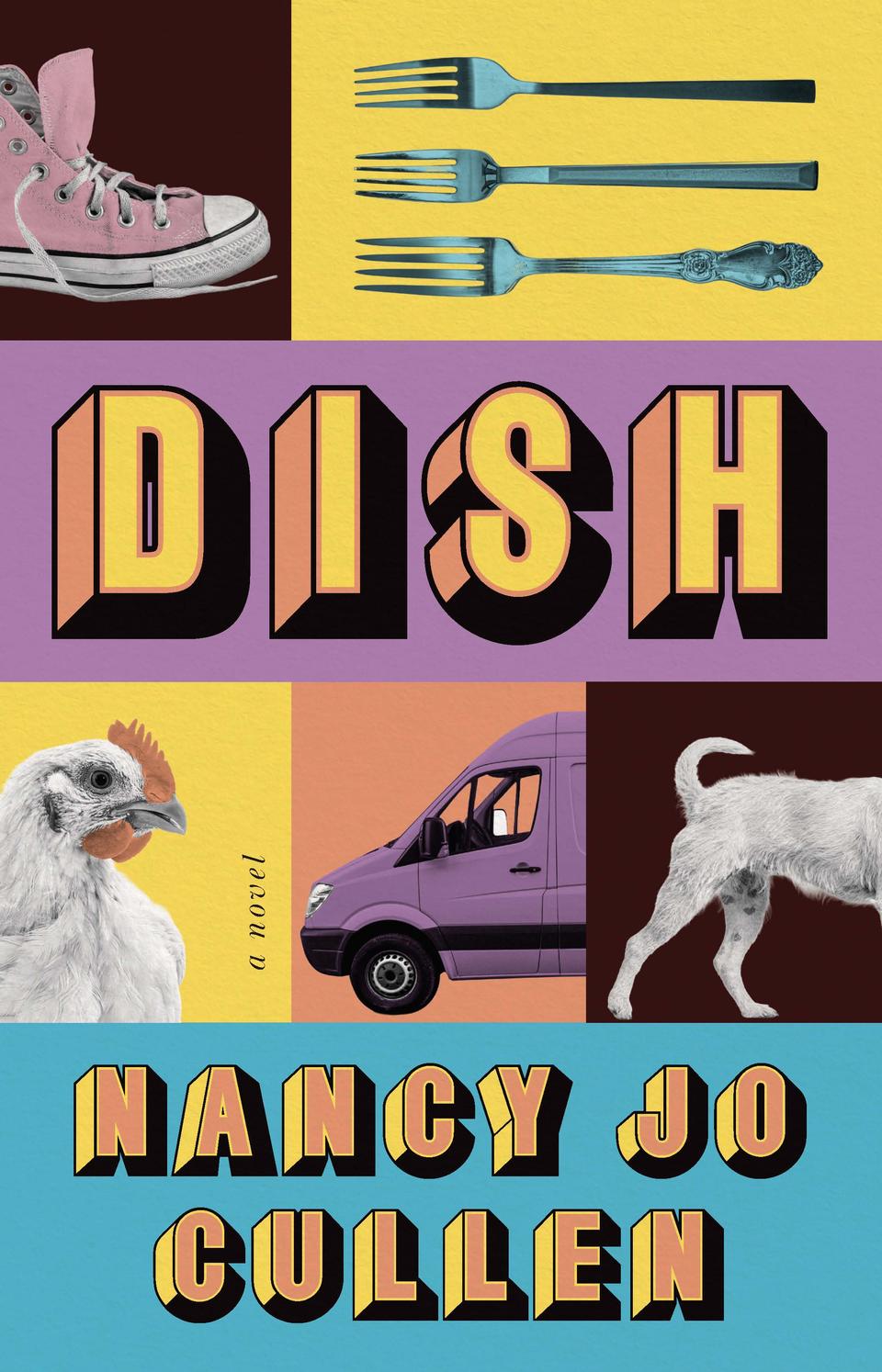
While it’s true that Nancy Jo Cullen had me at hello with the Brazilian wax-inspired story “Brenda’s Bush” from her 2013 fiction debut, Canary, she has managed to KEEP me—through 2019’s The Western Alienation Merit Badge and now her new novel Dish—with her keen eye for the perfect detail, her characters’ offbeat insider/outsider perspectives, her fantastic sense of humour, and a prose style whose rhythms I just can’t get enough of.
In Dish (which is just as good as its cover promises!), chef Frida Davis-Lefebvre is already back in her BC hometown with her tail between her legs after the failure of her big-shot Toronto restaurant. To add insult to injury, her new job at a local hotel brings her back into connection with her once-upon-a-time fiance to whom she’s still most explicably attracted. And speaking of blasts from the past, Perry—a down-and-out whose single connection to Frida had been the sperm donation that resulted in her conception decades before—has washed up at Frida’s moms’ house where he’s staying as he tries to put his life back together.
Dish is the story of Frida, and also of Perry, navigating these relationship tangles amidst the twists and turns of life as they try to move forward, stay sober, and figure out both where they’re going and how to get over where they’ve been. A celebration of queer family and chosen family, Dish is a love story—and a most compelling one—on so many levels, and an absolute delight.
October 9, 2026
Books to Fall For
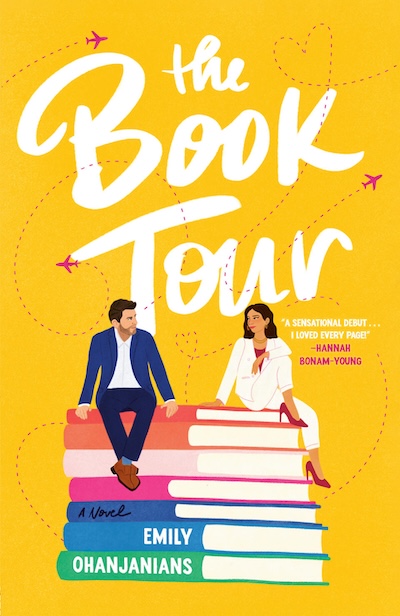
Who knew I wasn’t the only author who released a yellow book this spring in which the protagonist is masturbating within the first 50 pages! What a club! I feel lucky to join it. I loved this gem of a novel, for its empowered heroine, the dreamiest love interest ever, and such a smart and funny exploration of family, friendship, intergenerational trauma, and the inner workings of the publishing industry. The Book Tour, by Emily Ohanjanians, is the story of Ana, a Type A podcaster whose Armenian mother has never gotten over her dropping out of medical school, never mind that her podcast has brought her enormous success. And now she’s channelled her ethos (empowering second-generation immigrant young people to believe in themselves, delivering the validation their own parents have never been able to) into a book that’s sure to be a smash success. All good, except when her superstar publicist resigns, she’s replaced by the stiff and stuffy Ryan, whose lack of support for the book has always been apparent to Ana—she can tell that he thinks it’s a frivolous project and that Ana herself is an unserious person. But of course there is more to Ryan than meets the eye, and Ana’s book tour ends up being a sweet and sexy journey toward self-discovery and maybe even love. Like Ana herself, the novel packs a punch, and it’s also a pure delight.
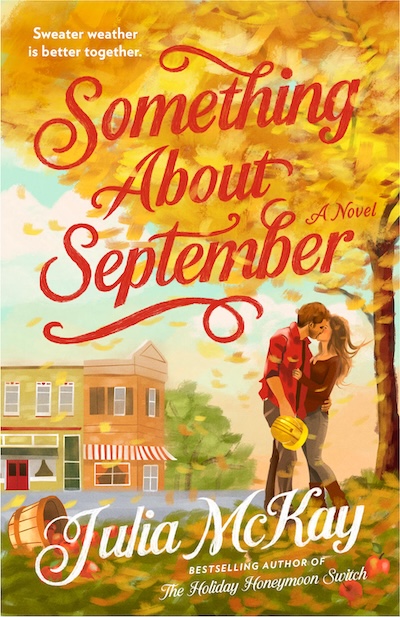
And this autumnal bestseller by Julia McKay (aka Marissa Stapley) is my favourite yet of Marissa’s romances. Something About September is so cozy and comforting, and with apple pie spice and bookish vibes. Go read it!
October 6, 2026
The Paris Files, by Eva Jurczyk
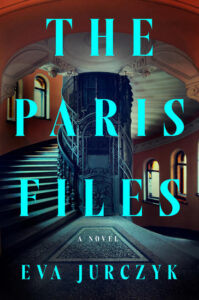
There is darkness when one first enters the apartment building at 44 Rue Oberkampf in Paris’s eleventh arrondissement, which is to say that none of us—neither the characters in Eva Jurczyk’s latest, The Paris Files, nor those of us who are reading—really knows what we’re getting into here. The story, the characters, all of it just off-beat enough to keep surprising at every turn, every twist, and the image that springs to mind is the staircase in the building spiralling up-up-up, the stakes growing ever higher.
It’s the story of Genie, a Canadian woman who meets an American man while she’s travelling in Asia, and they make this plan to meet again in Paris, which sounds incredibly romantic, except that Genie’s best friend is doubtful. Because Genie has been burned before, can come on a bit too strong, wants too much, and she’s close to 40, not some young ingenue. But the American arrives, the best friend is proven wrong, apparently…but not entirely, because the entire novel is told through police interviews. With Genie herself, telephone interviews with the friend Toronto, with the building’s concierge, the neighbours, the grumpy man who sells fruit and vegetables across the street and keeps an eye on everything. Because it seems that not long after the American arrives, he and Genie spending a few love-soaked days together, he suddenly disappears.
Like the staircase, the novel is dizzying, disorienting. Genie is unreliable, characters are keeping secrets, just why the police are interviewing her in the first place isn’t clear. And while the novel’s structure could pose a limitation for lesser writers, Jurczyk’s cool and easy prose style, underlined by a darkly comic approach, brings the story and its characters to life, along with Paris itself (and the food!), and the overall effect is utterly propulsive. What I didn’t know when I was getting into this book was that I’d start reading it on Sunday, and be as close as is humanly possible to being LITERALLY unable to put it down, so that was my day gone, but I couldn’t have spent it better.
A fresh twist on the unhinged female narrator, a story about friendship, travel, duplicity, and real estate, I had high hopes for this novel, but the experience of reading it surpassed all my expectations. It’s out today and you should buy it!
September 30, 2026
Naoyak, by Norma Dunning
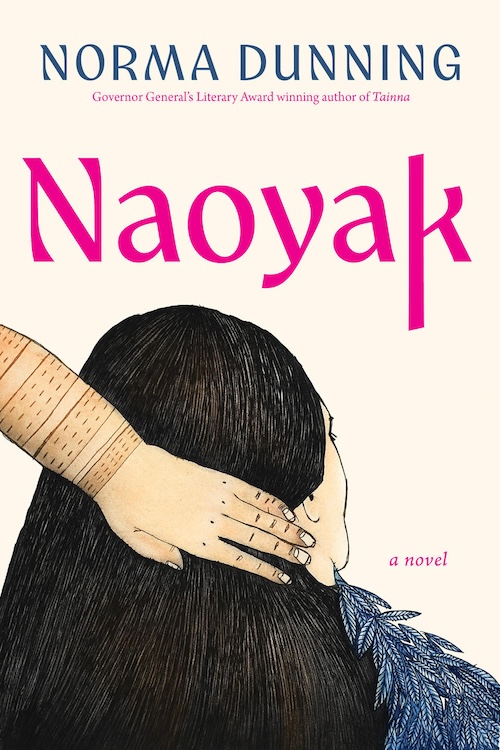
With Naoyak, Norma Dunning follows up the Governor General’s Award-winning Tainna with a warm and rollicking novel about an Inuit woman whose plan for a better life for her son involves becoming inextricably bound to an inept researcher with an uncanny resemblance to Conan O’Brien, and following him all the back from the north to his home in Sherwood Park, Alberta, moving straight into the apartment in his basement. Naoyak is already behind on her plan to leave for the south by the time she’s 25, but luckily she makes up for lost time by being accompanied by the spirit of her grandmother and also Kiviuk, the giant guardian of Inuit lore who’s been watching over since birth.
It’s through their influence and also her own peculiar charm that Naoyak manages to win the researcher over (overcoming her own ambivalence to do so), and also secure a job at the university as a “community liaison” between university officials working on a study about Indigenous health and the people back home in her north community. But such a role is less straightforward than Naoyak imagines, and presumes that the academics would be approaching community members in relationship and not simply as another extension of the colonial scheme. When it turns out that this might not the case, its the southerners’ turn to get schooled.
Dunning’s fiction debut Annie Muktuk and Other Stories was such a revelation, and she keeps on giving with this latest release, with an audacious protagonist who’s just as unforgettable.
September 25, 2026
Big Little Truths, by Liane Moriarty
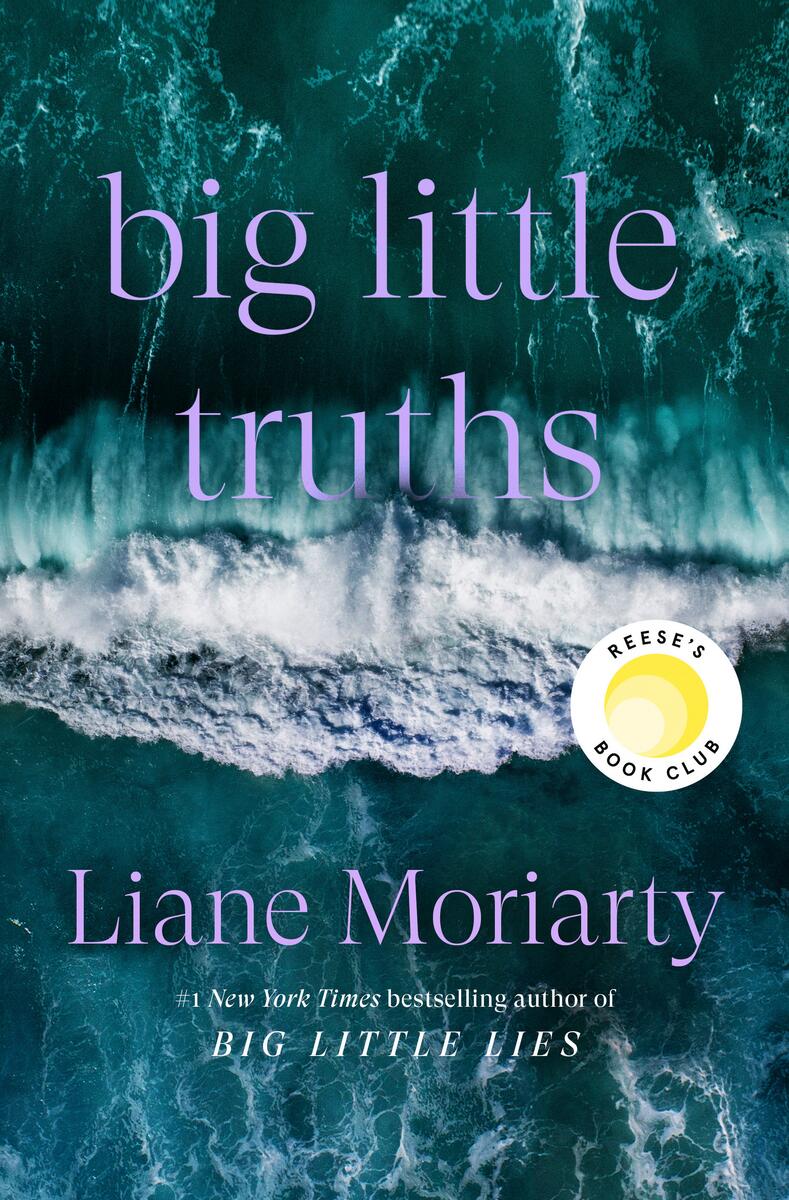
My first encounter with Liane Moriarty was a mass market paperback copy of Big Little Lies purchased from the drug store in 2017, a tie-in to the smash-hit HBO series that I never ended up watching, but I’ve been a big fan of Moriarty ever since then, and wish that she received more credit for her talent as a novelist from readers who might dismiss her as merely popular or as a women’s fiction writer. Craft-wise, Big Little Lies was a turning point for her, her sixth novel, and the first of the sprawling ensemble cast books that she’d be writing ever since, books that are twisty with plot but also with dizzying points of view, some of the most immediately unsympathetic characters rendered with a beautifull surprising humanity.
Big Little Truths follows Big Little Lies, and it’s Moriarty’s first sequel—a sequel to the book she wrote, not the TV show into which it was adapted, which differed from the book in several ways, most notably in being set in California. But with Big Little Truths, we’re back in Pirriwee, in the suburbs of Sydney, Australia, and the children who were kindergartners in the previous book are now in their teen years, which is to say that all the little problems of parenting have become positively gargantuan.
As ever with Moriarty’s work, everybody has a secret, but there are also secrets that nobody knows about yet, and what is going on with the kids and their world which none of their parents are able to properly permeate? There are also parents whose eldercare needs are more demanding than the kids are, a charismatic new history teacher who’s managed to infiltrate the mom’s group, and a severed finger that’s just been delivered to the school principal—what exactly is going on here?
Poignant, hilarious, frothy and yet not frivolous in the slightest—there are biting politics at the heart of this text—Moriarty has once again pulled off a rich and moving story about female friendship, motherhood, and middle age that is absolutely worth your time. And for those of you who haven’t read the first back (or for those who, like me, have forgotten its details), do not let that deter you, because Big Little Truths is a sequel that also stands alone.
September 21, 2026
Our Noble Selves, by Kate Atkinson
I periodically have to remind myself that once upon a time I didn’t read mysteries, that it wasn’t until Kate Atkinson’s Case Histories that I discovered my affinity for the genre, and Jackson Brodie became my gateway to Armand Gamache, Lane Winslow, Dame Polara, Hercule Poirot, Inaya Rahman, Cat Conway, and more. And I love the way that Atkinson has in the years since then permitted herself to dip in and out of genre fiction, including crime novels and historical fiction, blurring the lines between literary and genre, and those between the genres themselves. I adore the way that Atkinson continues to build whatever kind of literary container her stories require, her own brilliant sparkle and deft prose style the common thread through all of it.
And this time she’s sparkling in mid-century England, against the backdrop of the Festival of Britain, a government funded celebration intended to rouse a nation from its post-war doldrums, which turns out to be a big ask as rationing is ongoing and Britons are still wracked by war trauma. Among them is Harry Flynn, a reporter who spent his war was a captured civilian on the Burma Railway, and who’s hired by the festival for various tasks. What he’s there for is not exactly certain, but this is also the case for a number of his colleagues, which means that everyone has something to hide when a young Frenchwoman disappears—but it’s Harry upon whom suspicion falls immediately.
There’s a lot going on in this novel, a rollicking whirlwind, and lines like, “Flynn was impressed. He didn’t usually consort with women who knew both Milton and more than one sexual position.” A veritable circus, like the Festival itself, this book is very good time.
September 16, 2026
My Year in Fairyland, by Sarah Ellis
“I didn’t want Sherry to leave. I thought her decision was premature. In my sorrow, I felt the pull at every moment to appropriate her into the greedy organism of my own self. But Sherry was not me. She was her own self, in her own body, with her own history. My task and my ethical responsibility was to see her as clearly as I could and love her. To look closely and love is a principle that I’ve tried to apply to all the life presents. Sherry’s situation strengthened my belief in this principle even as it stretched it to the breaking point and often drained me.”
Acclaimed and award-winning children’s author Sarah Ellis’s memoir/essay collection My Year in Fairyland is many things—it’s a love story, a life story, a death story, a report from a journey into grief, an exploration of the books and reading that underline the author’s life, a consideration of the ethics of MAID and our responsibilities to one another as human beings, and so much more.
When Ellis met her wife Sherry (at a ukulele circle, but Sherry wasn’t there to play), Sherry had already made up her mind that she was going to end her life when she was ready, before her MS symptoms could take that life over altogether. Of course, Ellis didn’t entirely believe her, especially after the two of them stitched their worlds together. Surely their love, their life, would be enough to change Sherry’s mind? But no, Sherry’s mind was not for changing (and this was Sherry’s standard; Ellis’s illustration of her wife as a larger than life whirlwind of a character is one of the most delightful parts of this remarkable book), and it was out of love that Ellis committed to helping Sherry do what she’d always said she’d do, eventually being accepted for a medically assisted death in Switzerland in 2019.
The couple received the date for Sherry’s death a year ahead of time, and Ellis comes to see this liminal period as they were waiting for it to happen as a kind of fairyland. The usual rules are suspended, a surreality infuses everything, they’re working toward something inevitable that feels impossible. Ellis writes about realizing that notions of a bucket list would not work for them, that steeping themselves in ordinary everydayness was what they truly desired with the time they had left together.
But there are practical matters as well—they’d maintained separate households, and needed to clean out Sherry’s house. What to do with the two coffins she used as coffee tables? What things of Sherry’s does Ellis want to hold onto?
She writes about what fairyland and notions of play had meant to her as a child, of how they’d inform her perspective of the world and a child’s eye view. She writes about how notions of play underlined the life she built with Sherry: “It was the shape of our landscape.” About her struggle to accept Sherry’s wishes, and how her finally doing so is informed by an allusion to The Secret Garden. About riddles in general and the ultimate riddle, which is life itself. About the fairy stories that had “furnished the rooms of my imagination for a lifetime.” How writing helped her through the experience, and made her think about her writing differently, that maybe it had always been more personal than she’d ever imagined. About weddings, wifedom, queerness, and “The Owl and the Pussycat.” Dancing by the light of the moon. (The moon.) And finally of what it was to come home from the experience of Sherry’s death, the same but utterly changed. The riddle of that, her own personal Odyssey.
My Year in Fairyland is a gorgeously woven tapestry, a generous offering, and a pleasure to read.